



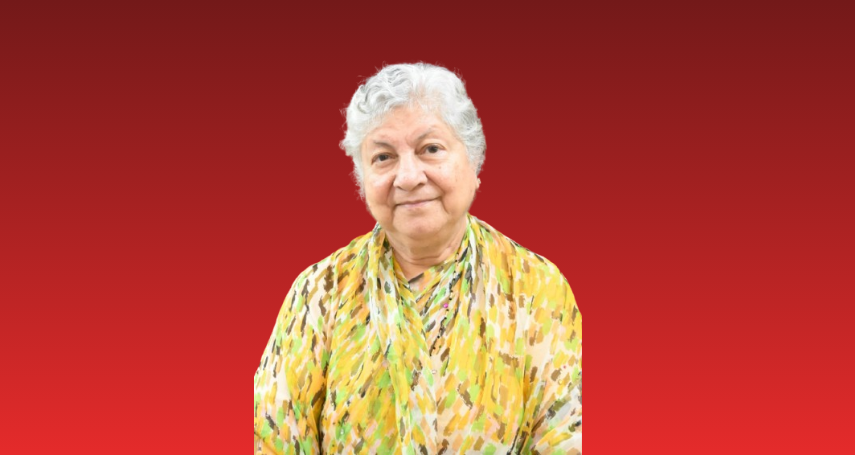
In the ever-evolving landscape of Indian education, there are leaders who manage systems, and then there are visionaries who shape generations. Rama Datt belongs to that rare second category—an educationist whose work transcends textbooks and timetables, touching the very soul of learning.
With a career spanning nearly four decades, she has emerged as a towering figure in the academic world—known for her child-centric approach, visionary leadership, and innovative teaching strategies that brought parents and children closer than ever before.
A Legacy Built on Innovation and Heart
Rama Datt’s journey began as the Primary Head of Maharaja Sawai Man Singh Vidyalaya, where she championed a value-based, child-first learning culture. As the Founder Principal of Mahaveer Public School and later Principal of Sanskar School, she redefined the role of a school leader—balancing academic excellence with emotional intelligence.
Her boldness as an innovator was evident early on. In 1997, she introduced admission by lottery, ensuring fairness and transparency in a process often marred by bias or favouritism. It was a radical move that won the trust of parents and set an example of integrity in school administration. Just two years later, in 1999, she took another audacious step—removing books and examinations in primary classes. At a time when rote learning dominated classrooms, this decision prioritised creativity, curiosity, and experiential learning. Two decades later, the same approach was echoed in the National Education Policy (NEP) 2020, proving her far-sighted vision.
At Sanskar School, her leadership also brought another landmark achievement: it became India’s first Microsoft School, a testament to her ability to seamlessly blend tradition with technology. Yet her most memorable contributions were often the quiet, human touches that stayed with students and families long after they left the classroom.
Homework That Became a Conversation
In an era when homework was seen as a burden, Rama Datt transformed it into a bridge between school and home. One of her most cherished innovations was the “Keer Homework”—inviting children to prepare the traditional sweet with their families. It was far more than a cooking exercise; it involved measuring ingredients together, sharing stories of tradition, and tasting the sweetness of collective effort. The lessons were practical, but the bonding was priceless.
Equally impactful was her idea of letters to parents as homework. Children were encouraged to write to their mothers and fathers—sometimes sharing joys, sometimes expressing gratitude, and sometimes offering apologies. Parents treasured these letters, often preserving them as keepsakes. The idea spread to other schools, becoming a practice that deepened emotional connections within families in ways conventional assignments never could.
Leadership Beyond the Classroom
Her influence extended far beyond one institution. Today, she serves as Executive Trustee of the Maharaja Sawai Man Singh II Museum Trust and the Jaigarh Public Charitable Trust, as well as Trustee of the Shila Mata Temple Trust. She contributes to academic governance at Maharaja Sawai Bhawani Singh School, The Palace School, and Maheshwari Girls’ Public School in Jaipur.
Through her teacher training programmes under Disha and her published works on education, parenting, and child development, she continues to inspire schools to be nurturing spaces for children and empowering environments for teachers.
Global Recognition, Local Roots
Her contributions have taken her to Germany, the UK, and the USA for educational exchange programmes, while her work has been recognised through prestigious honours, including the Sawai Pratap Singh Award, the Bharat Vidya Shiromani Award, and multiple Lifetime Achievement Awards. She has been featured in Who’s Who of Rajasthan and the Indian Army’s Forcenet magazine—proof that her influence resonates far beyond academic circles.
The Belief That Guides Her
For Rama Datt, leadership in education has never been about position or power—it has always been about purpose. Her guiding philosophy is simple yet profound: “To work on something that outlasts life itself.”
At 76 years of age, she remains as energetic and visionary as ever—advising institutions, mentoring educators, and championing innovations that make learning more human and more joyful. For her, education has never been just a career; it has been a lifelong calling, one that continues to inspire thousands to believe that true learning is measured not by grades, but by the values we instil and the bonds we build.