









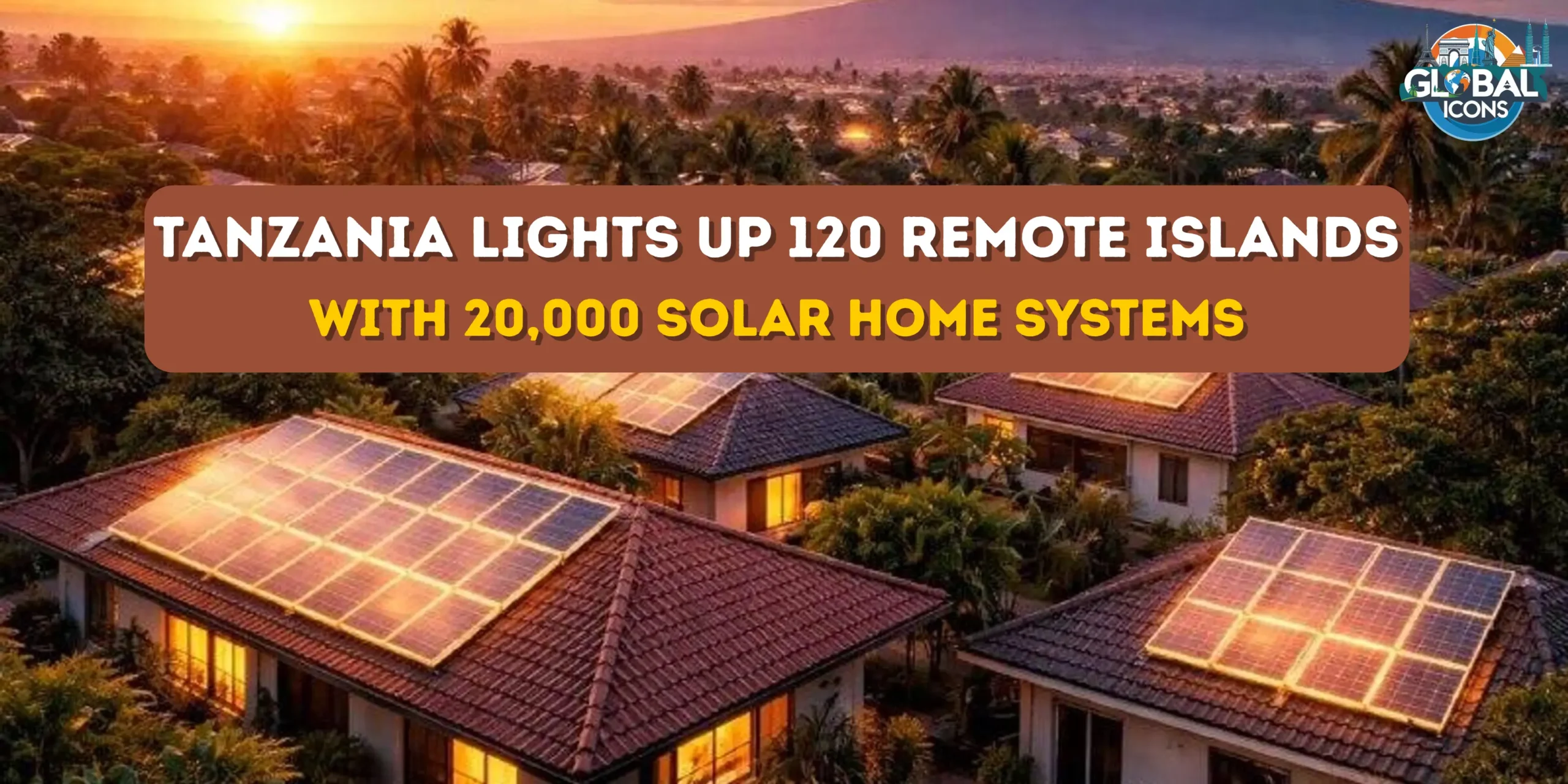
Tanzania Lights Up 120 Remote Islands with 20,000 Solar Home Systems
In a decisive step toward sustainable development and inclusive growth, Tanzania has launched an ambitious initiative to electrify 120 remote islands using 20,000 solar home systems. The project, inaugurated on February 21 at Bezi Island in Lake Victoria’s Ilemela district, aims to bring reliable, clean energy to thousands of households that have long remained off the national grid.
The move reflects Tanzania’s growing commitment to renewable energy and its determination to bridge the rural energy divide. For many of these island communities, access to electricity has remained a distant dream due to geographical challenges and the high cost of extending traditional grid infrastructure.
Empowering Remote Communities
The launch ceremony was led by Deputy Minister for Energy, Salome Makamba, who highlighted the transformative potential of the project. Spearheaded by the Rural Energy Agency (REA), the initiative will be implemented over the next two years across eight regions. These include Mwanza, Geita, Kagera, and Mara around Lake Victoria; Rukwa on Lake Rukwa; and the coastal regions of Lindi, Mtwara, and Coast.
With an estimated investment of 8 billion Tanzanian shillings, approximately 3.2 million US dollars, the project is designed to make energy accessible and affordable. Subsidies will cover up to 75 percent of the connection costs, significantly lowering the financial barrier for low-income households. This is particularly important for families who have traditionally depended on kerosene lamps and diesel generators, both of which are costly and environmentally harmful.
Officials noted that transporting materials and extending grid infrastructure to island locations is both expensive and logistically complex. Solar home systems, being stand-alone and easy to install, provide a practical and sustainable alternative. Acting REA Director General Jones Olotu emphasized that the initiative aligns closely with the country’s broader goal of achieving universal access to electricity.
Driving Economic Opportunities
The impact of the project goes far beyond lighting homes. Access to reliable electricity is expected to unlock new economic opportunities and improve livelihoods across these regions.
In the Lake Victoria basin, fishermen will be able to store their catch using refrigeration, reducing spoilage and increasing their earnings. This is expected to significantly improve income stability in communities where fishing is a primary source of livelihood. In coastal areas, the availability of electricity will support activities such as seaweed farming, processing, and tourism services.
Small businesses, from local shops to guesthouses, will also benefit from consistent power supply. Reliable lighting will extend working hours, while the ability to charge devices and operate small equipment can enhance productivity. The initiative is closely linked to President Samia Suluhu Hassan’s vision of strengthening the blue economy, which focuses on sustainable use of marine and coastal resources.
A Step Toward a Greener Future
This initiative builds on Tanzania’s earlier renewable energy efforts, including the Kilwa solar project launched in 2025. It also places the country firmly within a broader continental movement toward clean energy adoption. Across Africa, decentralized solar solutions are emerging as a key strategy for reaching underserved populations.
International coverage of the launch reflects growing global interest in Africa’s renewable energy progress. More importantly, the project represents a practical model for how innovation can address long-standing development challenges.
As Tanzania moves toward its target of achieving full electrification by 2030, projects like this demonstrate that the path forward lies in adaptable, community-focused solutions. For the residents of these remote islands, the arrival of solar power is more than just access to electricity. It is a step toward improved quality of life, economic independence, and a more sustainable future.