



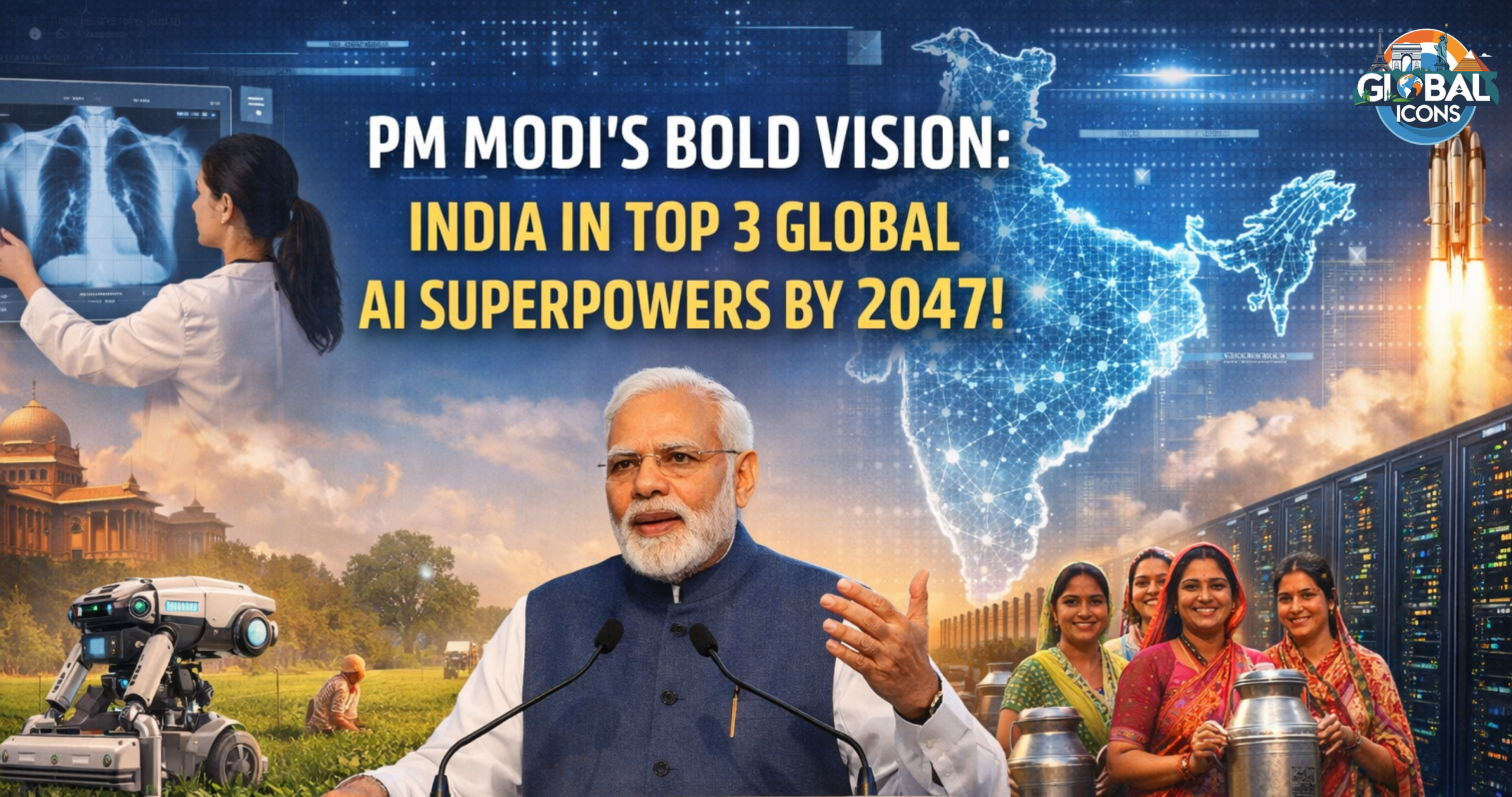
Prime Minister Narendra Modi has outlined an ambitious goal for India to rank among the world’s top three AI superpowers by 2047, emphasizing creation over mere consumption of the technology. In an exclusive interview with ANI during the India AI Impact Summit 2026 in New Delhi—the first major global AI event hosted in the Global South—he stressed that AI must drive “Viksit Bharat” through human-centric innovation.
Summit Context
The five-day summit, themed “Sarvajan Hitay, Sarvajan Sukhaye” (Welfare and happiness for all), gathers world leaders, tech executives, and stakeholders to discuss AI’s role in inclusive growth, public systems, and sustainability. Modi described AI as a “civilisational inflection point,” warning that advanced capabilities demand greater responsibility, with priorities like governance, diverse datasets, climate solutions, agriculture, health, and multilingual access at the core.
AI’s Role in Development
Modi highlighted AI’s practical impacts, such as early detection of tuberculosis, diabetic retinopathy, and epilepsy in rural health centers; personalized learning in regional languages for government school students; and tools like Amul’s AI guidance for 3.6 million women dairy farmers in Gujarati. Initiatives like Bharat Vistaar integrate AI for crop advice, soil analysis, and weather forecasts, while AI aids in digitizing ancient manuscripts, bridging urban-rural gaps and preserving heritage.
Government Initiatives
Under the IndiaAI Mission, India has surpassed GPU targets, established four Centres of Excellence in healthcare, agriculture, education, and sustainable cities, plus five skilling centers. The Union Budget 2026-27 boosts data centers, cloud infrastructure, semiconductors, and AI compute access for startups, aiming for a $400 billion IT sector by 2030 via AI-enabled services.
Addressing Challenges
To counter AI biases—especially in diverse Indian contexts—efforts focus on inclusive datasets and regional languages. Safety measures include the IndiaAI Safety Institute (launched January 2025), watermarking for AI content, deepfake rules, and the Digital Personal Data Protection Act. Modi called for global AI norms on oversight, transparency, and bans on misuse like deepfakes or crime.
Job Market and Skilling
Dismissing youth fears of job loss, Modi positioned AI as a “force-multiplier” that evolves work, citing historical tech shifts and India’s #3 rank in the 2025 Stanford AI Vibrancy Index. Massive skilling programs prepare the workforce now, expecting AI startups worth hundreds of billions to create millions of jobs.
Aatmanirbhar Vision
For self-reliant India, Modi envisions sovereign AI models in native languages deployed globally, powering efficient governance studied worldwide. Every Indian should see AI as an opportunity enabler, not a threat, aligning with lessons from DPI like Aadhaar and UPI for the Global South.