


In a move he is calling the “father of all deals”, US President Donald Trump has announced a new trade agreement with India that sharply lowers US tariffs on Indian goods while tying the cut to major shifts in India’s energy sourcing and market access policy. The announcement followed a call between Trump and Indian Prime Minister Narendra Modi and has been positioned by both sides as a landmark reset in bilateral economic ties.
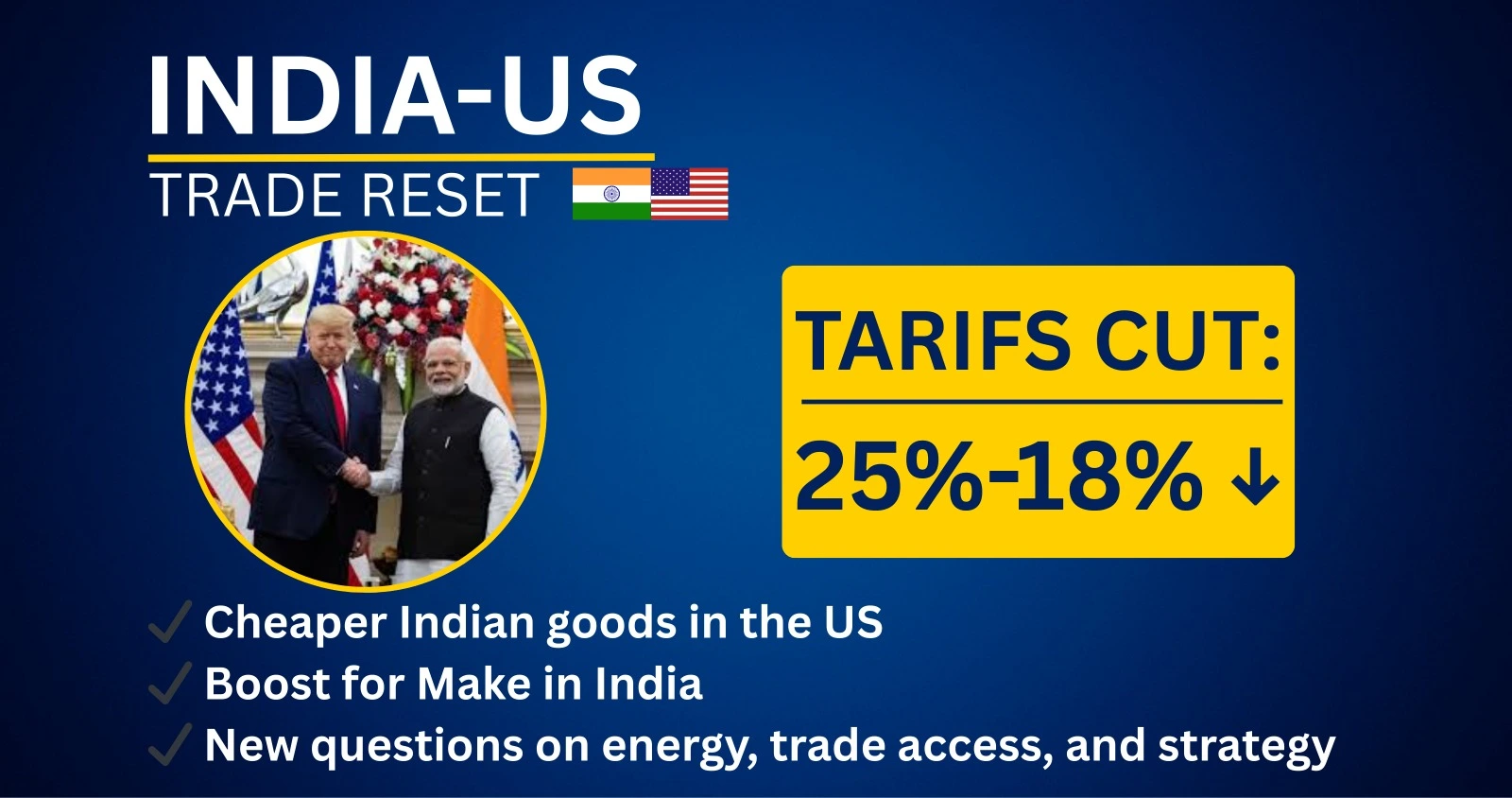
Trump said the United States will reduce its reciprocal tariff on Indian goods from 25 per cent to 18 per cent with immediate effect. This follows last year’s hike in US tariffs on India to double‑digit levels as part of a broader reset of Trump‑era levies, and is expected to give Indian exporters a cost advantage over several other emerging‑market competitors facing higher US duties. Prime Minister Modi welcomed the move, framing it as a boost for Indian manufacturers and asserting that “everything is possible with self‑confidence” in his message after the deal.
In a detailed post on his social media platform Truth Social, Trump linked the tariff relief to a sweeping package of commitments he says New Delhi has made. He claimed that India has agreed to “BUY AMERICAN at a much higher level,” including more than 500 billion dollars worth of US energy—spanning oil, gas and coal—along with technology, agricultural and other American products. Trump further stated that India will progressively reduce its own tariffs and non‑tariff barriers on US goods “to zero,” language that, if formalised, would represent a radical opening of one of the world’s more protected major markets.
The most geopolitically sensitive element is Trump’s assertion that India has agreed to halt purchases of Russian oil and instead pivot to US and potentially Venezuelan supplies. He has directly connected this shift to efforts to squeeze Moscow’s revenue and apply additional pressure over the war in Ukraine, signalling Washington’s intent to use trade and energy access as levers of strategic influence. India has in recent years become one of the largest buyers of discounted Russian crude, making any substantial change in sourcing highly consequential for global oil flows and price dynamics.
So far, Indian official readouts have clearly and publicly acknowledged the US decision to cut tariffs on Indian exports to 18 per cent and have highlighted the positive impact on “Make in India” and job creation. However, New Delhi has not, in its own statements, mirrored Trump’s strongest claims about bringing Indian tariffs on US goods down to zero, ending all Russian oil imports, or committing to the full 500‑billion‑dollar US energy package, which currently appear primarily in US political and media interpretations of the deal. Trade analysts note that India’s average applied tariffs remain among the higher ones in major economies—World Bank and WTO data show simple average applied rates in low double digits—suggesting that any path toward “zero” tariffs would require prolonged negotiations and significant domestic reform.
For global markets, the recalibration of tariffs gives Indian exporters renewed access and potentially a relative edge in sectors such as textiles, engineering goods, and pharmaceuticals, while deepening interdependence between the world’s largest and fifth‑largest economies. For India’s strategic planners, the emerging bargain raises difficult questions around energy security, strategic autonomy, and the country’s long‑stated ambition to pursue a multi‑aligned foreign policy rather than formal bloc politics. How New Delhi operationalises the more controversial parts of the package—especially on Russian oil and tariff liberalisation—will determine whether this breakthrough is remembered as a transformational partnership milestone or as a politically charged announcement that proved hard to fully implement.