





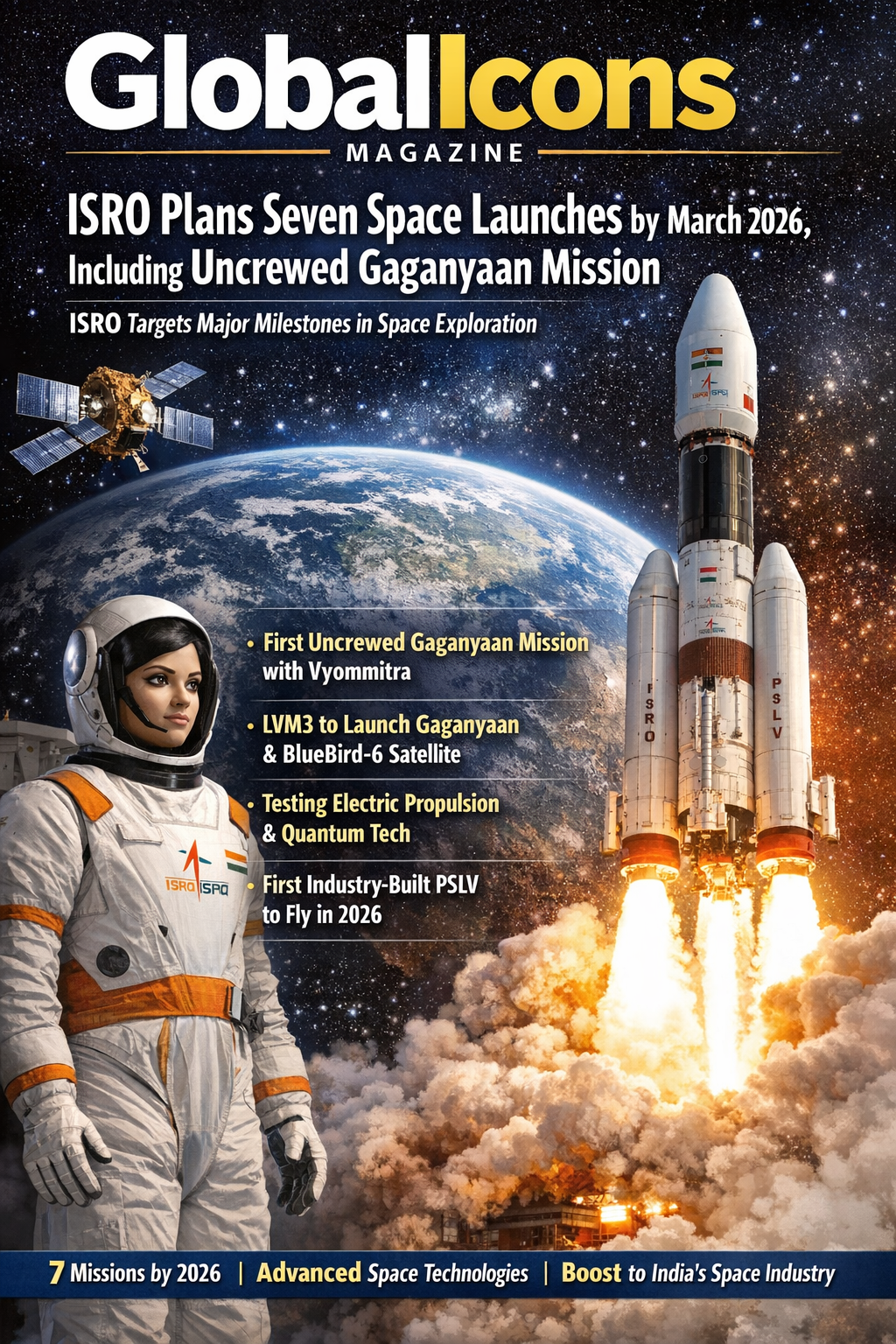
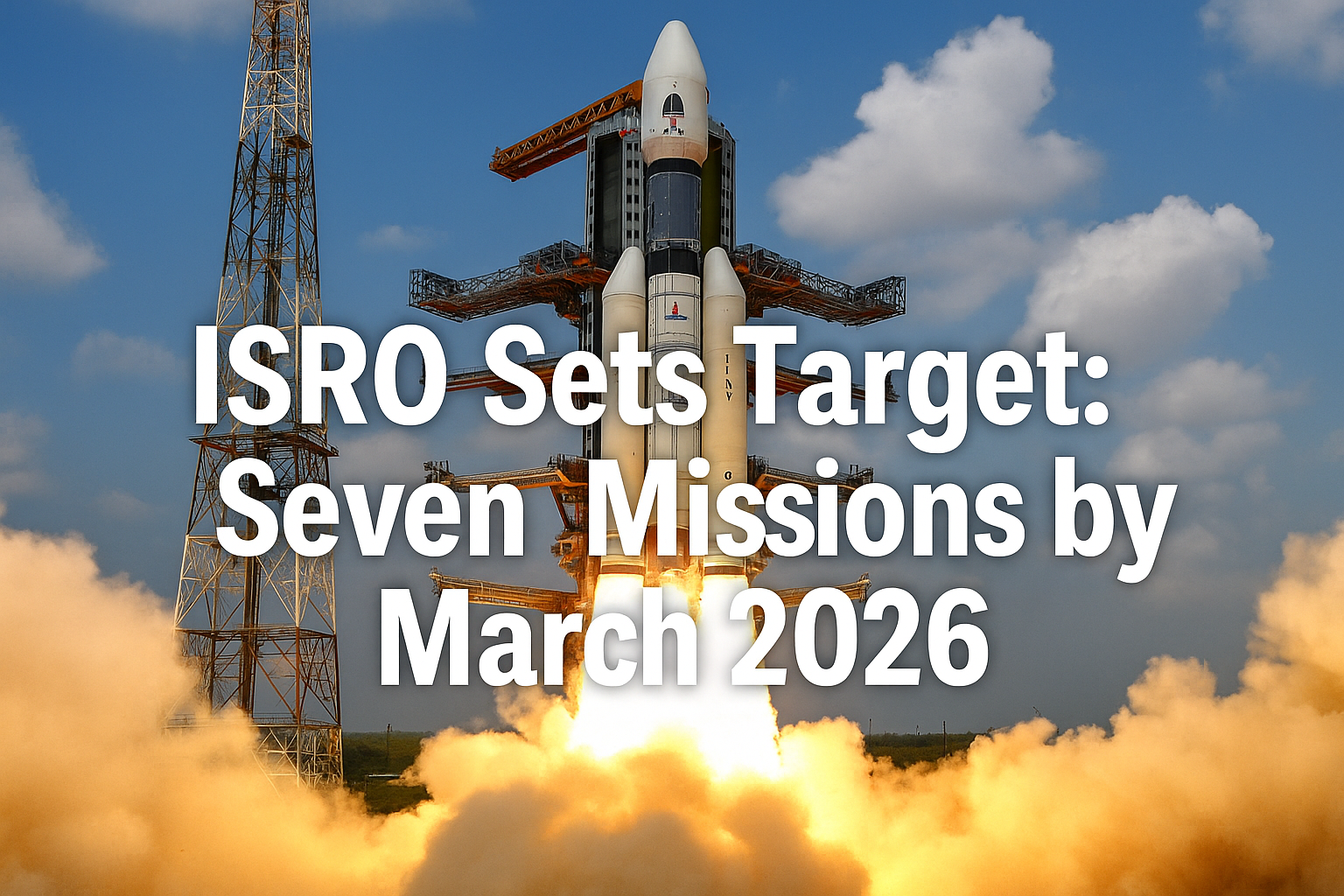


Space launches don’t forgive shortcuts. And on Wednesday morning, that reality played out in real time at Sriharikota.
The Indian Space Research Organisation successfully launched the BlueBird Block-2 communication satellite aboard its heavy-lift rocket LVM3-M6, after a brief but deliberate 90-second delay. The launch, originally set for 8:54 am, finally lifted off at 8:55:30 am from the Satish Dhawan Space Centre.
The reason for the pause was telling. Mission controllers detected a potential space debris conjunction along the flight path and chose caution over speed. In modern spaceflight, that decision reflects maturity, not hesitation. When payloads cost hundreds of millions and orbits are crowded, every second of analysis matters.
A Landmark Commercial Mission
This was not just another launch. BlueBird Block-2 is the heaviest commercial satellite ever launched by ISRO into Low Earth Orbit, tipping the scales at around 6,100 kg. That alone makes the mission historic.
More importantly, the satellite represents the next generation of space-based communication. BlueBird Block-2 is designed to deliver direct-to-cellular broadband connectivity, allowing standard smartphones to connect straight to satellites without special hardware. If deployed at scale, this technology could change how connectivity reaches remote regions across the globe.
For ISRO, this mission reinforces its growing role as a trusted commercial launch partner, capable of handling complex, high-mass payloads with precision.
Why LVM3 Matters
At the centre of the mission was ISRO’s most powerful rocket, the LVM3, earlier known as GSLV Mk III.
LVM3 is a three-stage vehicle featuring:
-
Two massive S200 solid strap-on boosters
-
A liquid core stage (L110)
-
An indigenous cryogenic upper stage (C25)
With a lift-off mass of about 640 tonnes and a payload capability of over 4,200 kg to Geosynchronous Transfer Orbit, LVM3 is India’s gateway to heavy satellites, deep-space missions, and future human spaceflight.
It has already proven itself through missions like Chandrayaan-2, Chandrayaan-3, and multiple OneWeb launches. The BlueBird Block-2 mission now adds another milestone to that track record.
Precision Over Speed
The 90-second delay may sound minor, but it underlines a larger shift in space operations. Earth’s orbital environment is increasingly congested. Avoiding debris is now a core part of mission design, not an afterthought.
ISRO’s decision to hold the launch until the flight corridor was clear signals its readiness for the realities of a crowded space economy. This is the discipline expected from agencies aiming for long-term leadership, not just headline launches.
What This Really Means
This launch wasn’t just about putting another satellite in orbit. It showcased:
-
ISRO’s heavy-lift reliability
-
India’s credibility in high-value commercial missions
-
The growing convergence of space, telecom, and everyday digital life
As LVM3 continues to evolve, it is becoming more than a rocket. It is a statement that India is ready to operate confidently in the most demanding layers of global space infrastructure.
BlueBird Block-2 lifting off from Sriharikota wasn’t just a launch. It was a signal.