



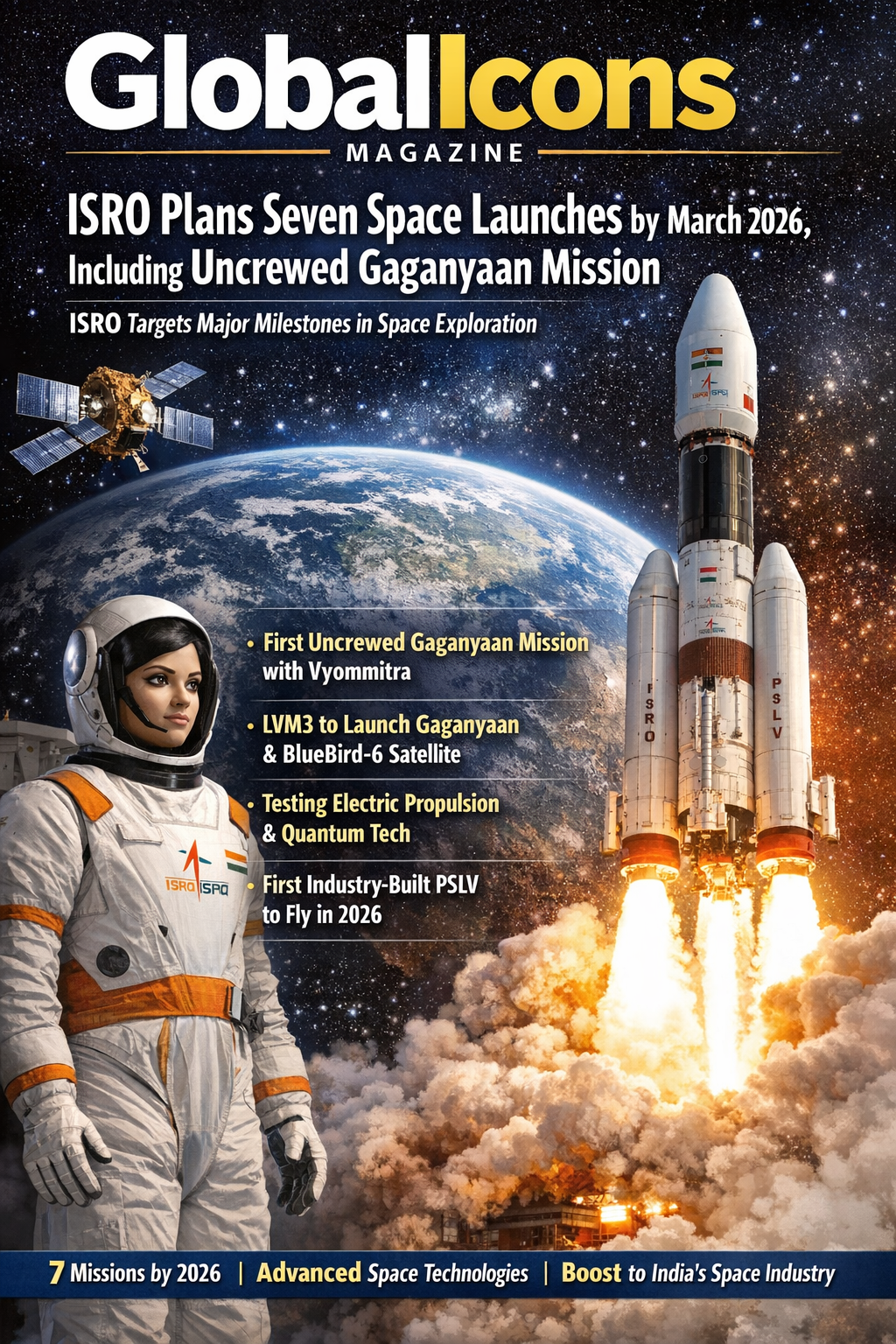
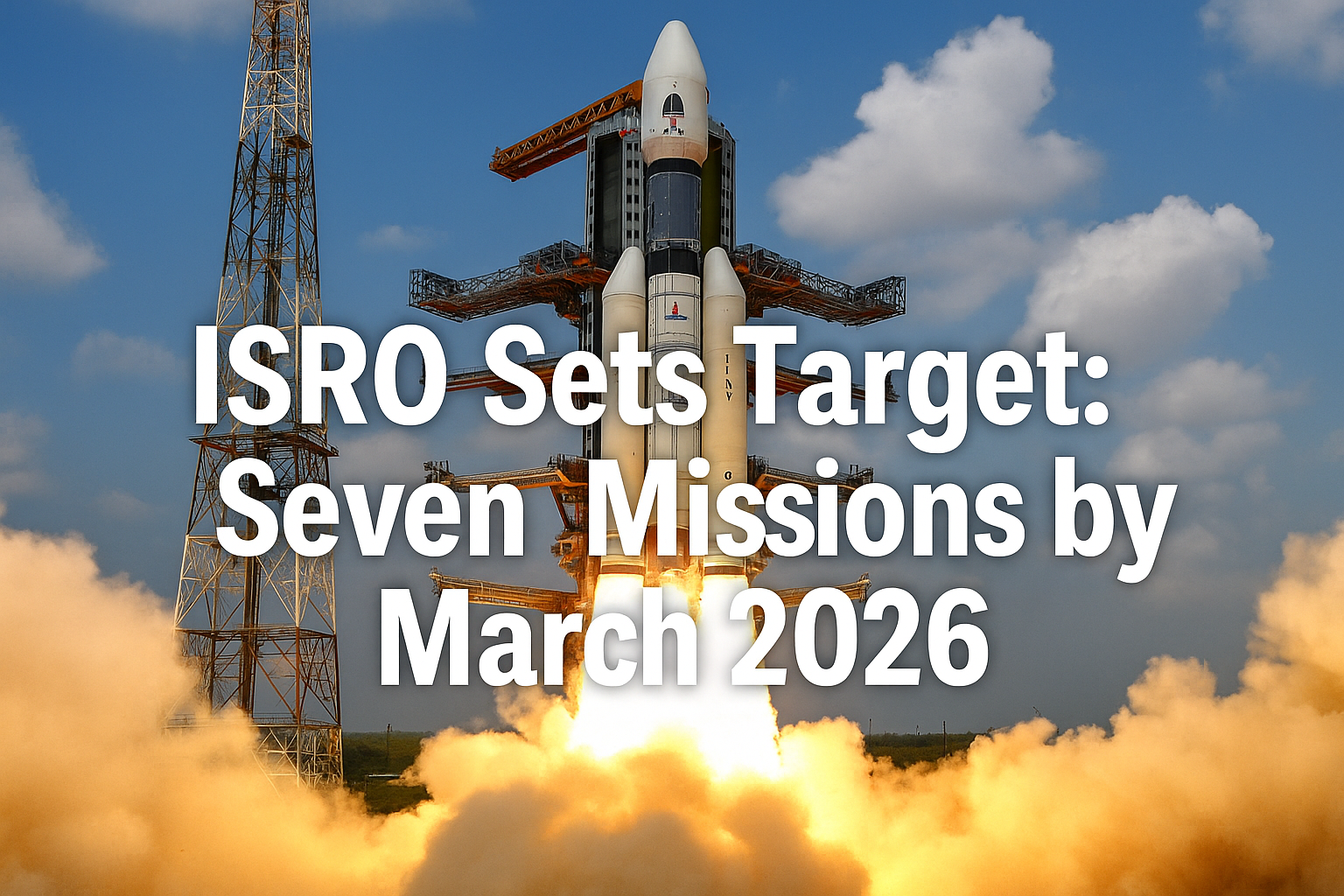


The Indian Space Research Organisation (ISRO) has announced an ambitious plan to carry out seven space launch missions by March 2026. This period marks a major milestone for India’s space programme, as it includes the first uncrewed mission under the Gaganyaan human spaceflight project.
These launches will use a range of Indian rockets, including LVM3, PSLV, GSLV Mk II, and SSLV. Together, they reflect ISRO’s focus on national priorities, advanced space technologies, and India’s growing role in the global space economy.
What Are These Launches About?
ISRO’s launch schedule is packed and strategically important. The missions will support communication, Earth observation, navigation, technology testing, and human spaceflight. The first launch is expected to take place very soon.
Each mission will use a different launch vehicle based on its objective, highlighting the versatility of India’s launch systems.
Gaganyaan Uncrewed Mission
One of the most important missions is the first uncrewed flight of the Gaganyaan programme. This mission will carry Vyommitra, a humanoid robot designed to simulate human conditions in space.
The key goals of this mission include:
-
Testing the performance of the human-rated launch vehicle
-
Studying aerodynamics during flight
-
Demonstrating operations of the orbital module
-
Validating safe re-entry and recovery of the crew module
ISRO plans another uncrewed Gaganyaan mission before sending Indian astronauts to space, which is targeted for 2027.
New Technologies: Electric Propulsion and Secure Communication
The PSLV-C63 mission will launch the Technology Demonstration Satellite (TDS-01). This mission will test several advanced technologies:
-
A high-thrust electric propulsion system that drastically reduces satellite fuel weight, making satellites lighter and more efficient
-
Quantum Key Distribution (QKD) for highly secure communication
-
An indigenous Travelling Wave Tube amplifier, supporting self-reliance in critical satellite communication components
Communication and Earth Observation Missions
Several launches will focus on satellites for communication and Earth monitoring:
-
LVM3-M5 will launch the BlueBird-6 satellite for US-based AST SpaceMobile under a commercial agreement through NSIL
-
GSLV Mk II will launch EOS-5 (GISAT-1A), replacing the earlier GISAT-1 mission
-
PSLV missions will carry Oceansat, an Indo–Mauritius joint satellite, Dhruva Space’s LEAP-2 satellite, EOS-N1 for strategic use, and 18 smaller satellites
-
An SSLV mission will place a dedicated small satellite into orbit before March 2026
Boost to Commercial Space and Industry
ISRO is also strengthening private sector participation. A consortium of NSIL, HAL, and L&T will manufacture five PSLV rockets, marking a major step toward industry-led launch services. This move supports faster, more cost-effective launches and greater commercial opportunities.
Key Takeaways
-
ISRO plans seven launches by March 2026
-
The schedule includes the first uncrewed Gaganyaan mission with Vyommitra
-
LVM3 will launch both Gaganyaan and the commercial BlueBird-6 satellite
-
India’s first industry-built PSLV is expected to fly in 2026
-
Advanced technologies like electric propulsion and quantum communication will be tested
-
Private industry will play a larger role in India’s space missions
Together, these missions underline India’s steady progress toward human spaceflight, technological self-reliance, and leadership in the global space sector.